Then I heard the voice of the Lord saying, “Whom shall I send? And who will go for us? ” And I said, “Here I am. Send me!” Isaiah 6:8 NIV
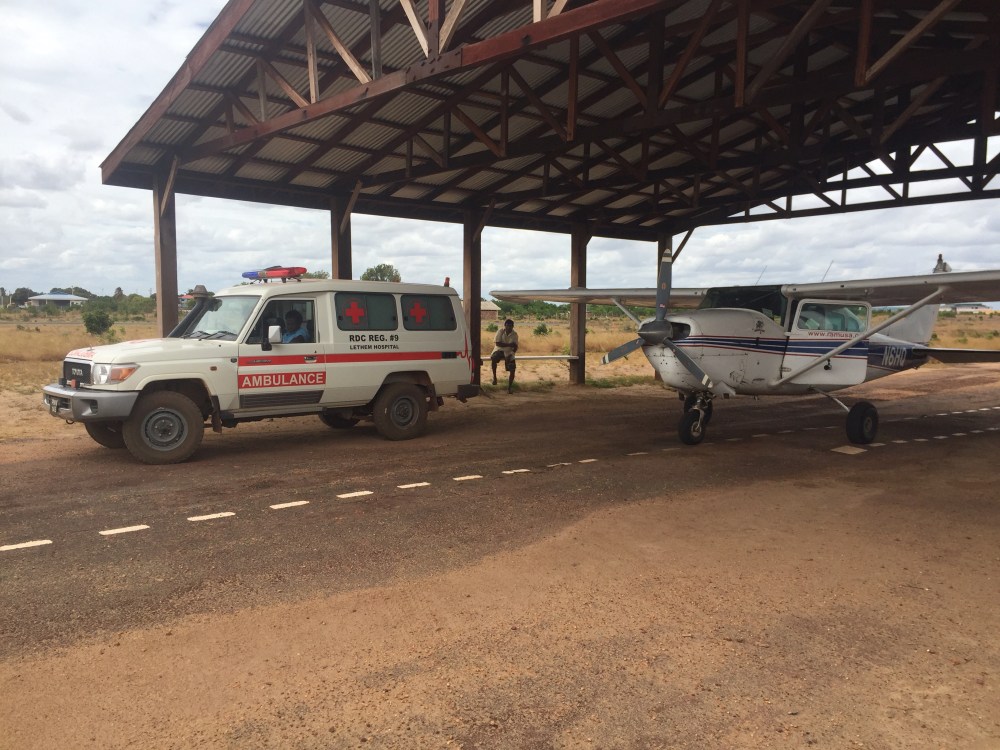
Being an air ambulance, one does not know what kind of medical emergency will come in next. Sometimes several missions are flown each day. Some days there are no flights at all. It is not scheduled. From sunrise to sunset, RAM is always on call.
Mondays through Wednesdays typically are the busiest days. A usual routine for me involves getting up before sunrise. Each morning I go check on the aircraft, perform any needed maintenance, fuel up if needed, and preflight to be ready for quick response. Usually I stay several hours at the airstrip to late morning or early afternoon. Then I go eat a snack, run errands, or work on things at the pilot room/office. Late afternoon I usually stay at the airstrip until it would be too late to respond to a call before sunset.
From initial dispatch call I can sometimes be airborne in less than 5 minutes. Even if I am at the pilot room, 10-15 minutes is realistic, as the airstrip is only a 5 minute bike ride away.
Here are some examples of emergency flights I have made:
- Malaria patients – suffering with the nasty parasite
- Maternity patients – mothers going to the hospital for safe delivery
- Maternity patients – mothers in labor
- Maternity patients – complications requiring quick evac
- Bone fractures – all kinds from feet to legs to hips to arms
- Trauma lacerations – bloody wounds from accidents or stabbings…
- Poisonings (tribal medicine man did not mix up good medicine…!)
- Venomous spider bites
- Venomous snake bites
- Appendicitis
- Gall stones
- Seizures
- Organ failures
- Psychiatric patients
- Unconsciousness/unresponsive – unknown causes
- Tuberculosis – not sure, but wear mask and sanitize everything…
- Respiratory difficulties
- Unknown problems causing vomiting and diarrhoea symptoms
- Kids falling out of trees – no joke it has happened twice already…
- Many others I cannot think of right now and more of the above.
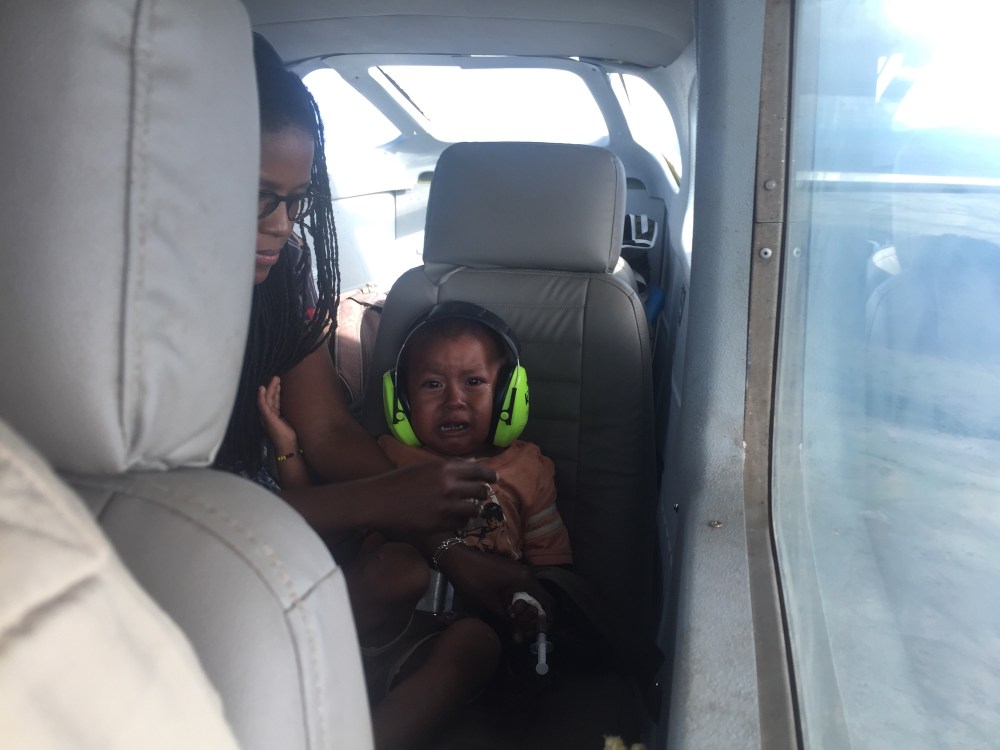
For as much as I would like to share stories of patient flights, with it being medical related one must be sensitive to the privacy of many matters. Often I must refrain from taking many photos of “interesting” situations. Most of the patients do not like being photographed and it can give a bad impression of outside volunteers coming to help.
Dare I say that some of the flights become routine? Common bone fractures. Mothers with babies to deliver. Various abdominal, respiratory, or other internal ailments. Flying recovered patients home if we are going near their villages to get other new patients.
But many flights stick out, such as a psychiatric patient that had to be bound at hands, legs and feet for transport with the seat belt strapped around her to keep restrained during the violent thrashing.

Or how about the venomous snake bite that was so bad there was a trail of blood streaming on the outside of the airplane?
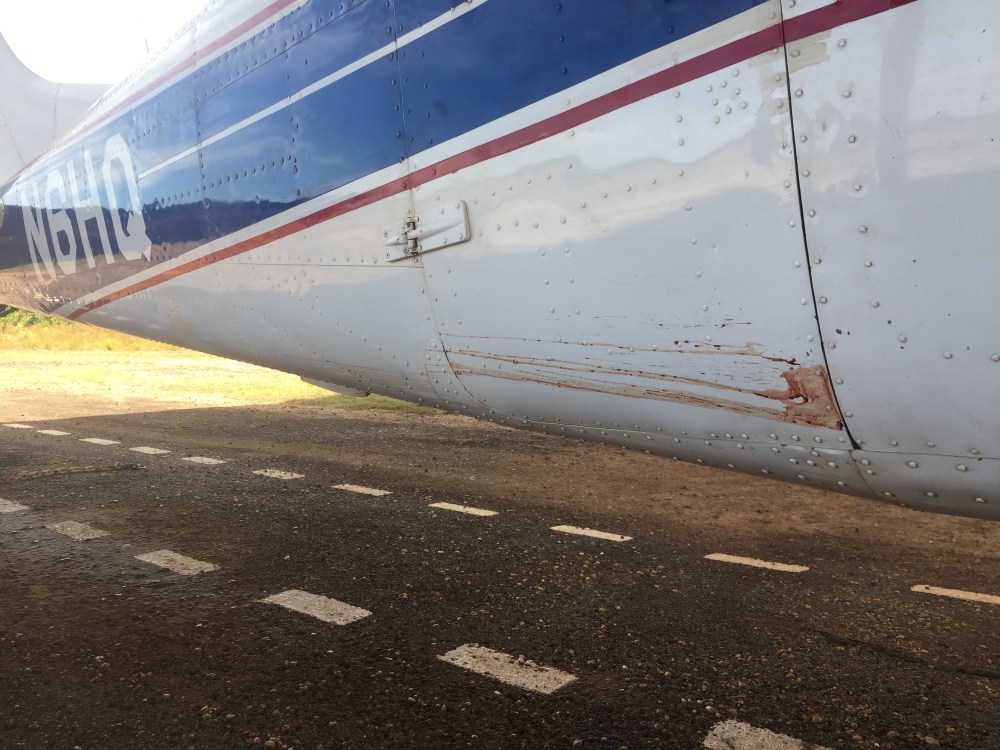
Blood streaking down the backdoor of the airplane. Even after all the years and flights I have made, this was a first. Thought about leaving it for character but that probably would not inspire much confidence from other patients!
Then there are the really weird ones, like the young lady that drank the “medicine man’s potion” that supposedly had healing properties. What she vomited up in the plane could only be described as liquid death.

And speaking of blood and vomit, yes, it happens. And more often than not actually. I regularly have to clean out the plane after some flights. Who needs sick sacks? We use plastic grocery and ziplock bags here. And the smell of fresh vomit on a hot day while flying in the bush? One has to experience it first hand to understand. I am waiting for the day there is a chain reaction and everyone in the plane looses their stomachs.
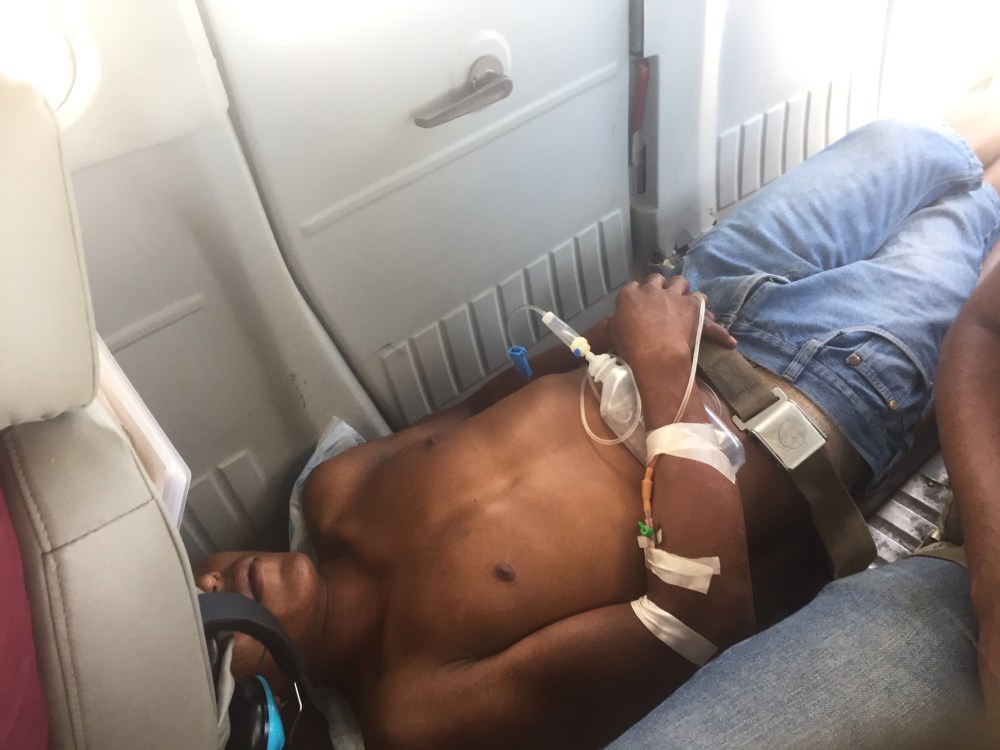
Depending on the situation and if the flight or patient requires it, one of the aircraft’s back seats can be removed for installation of a custom-made stretcher. In the past patients had to lay on a foam mat on the floor. The stretcher is much safer for transporting trauma and critically injured people where seats would be either unsafe or uncomfortable.
Without a doubt I would say that the emergencies regarding children and babies are some of the hardest. I have seen babies with malaria. Numerous children with fractures. Snake bites. Spider bites. Gastrointestinal distress. All patients are important but these tend to hit me the hardest emotionally.

With all of the challenges there are some rewards. An example would be the 90-year-old Amerindian that I flew to the hospital for a broken hip. After surgery and recovering a few weeks, I flew him back to his home village. It was nice to have him recognize and shake my hand.

Another would be transporting pregnant mothers to the hospital for safe baby delivery and weeks later having the privilege of flying both mothers and new babies back home. I have heard that other pilots that have flown in the area have had babies born in flight.
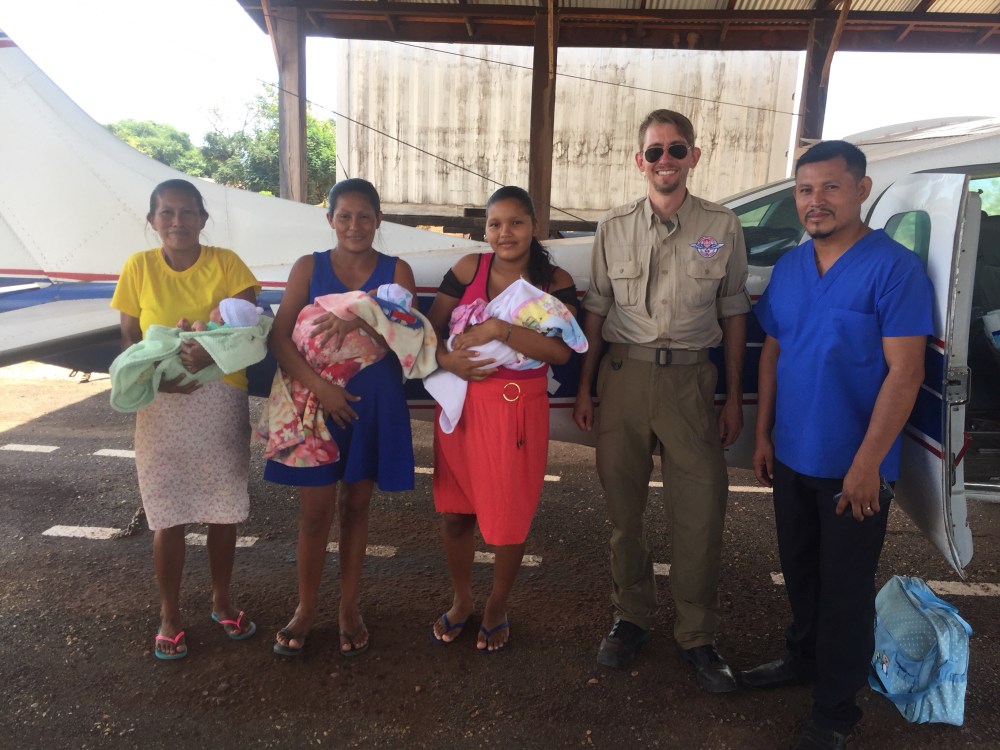
In my opinion, this is using aviation in an extremely fitting way. Even though I have been an aviator for a long time, medical missions has been some of the most fulfilling flying I have ever done. Small aircraft are not a rich man’s hobby here. They are utility trucks used to better people’s lives.
 TRAVEL FOR PURPOSE